Every piece of writing you publish, submit, or deliver carries your name and your reputation. In a world where billions of pages of content already exist online and AI writing tools are producing more every day, the risk of unintentional similarity has never been higher. A reliable plagiarism detector is no longer a tool reserved for suspicious professors or cautious editors. It is an essential part of any serious writing workflow, regardless of what you write or who you write it for.
This guide explains what a plagiarism detector does, why originality matters across every type of writing, what features define a genuinely useful tool, and how to build plagiarism checking into your routine so that originality becomes second nature.
What Is a Plagiarism Detector?
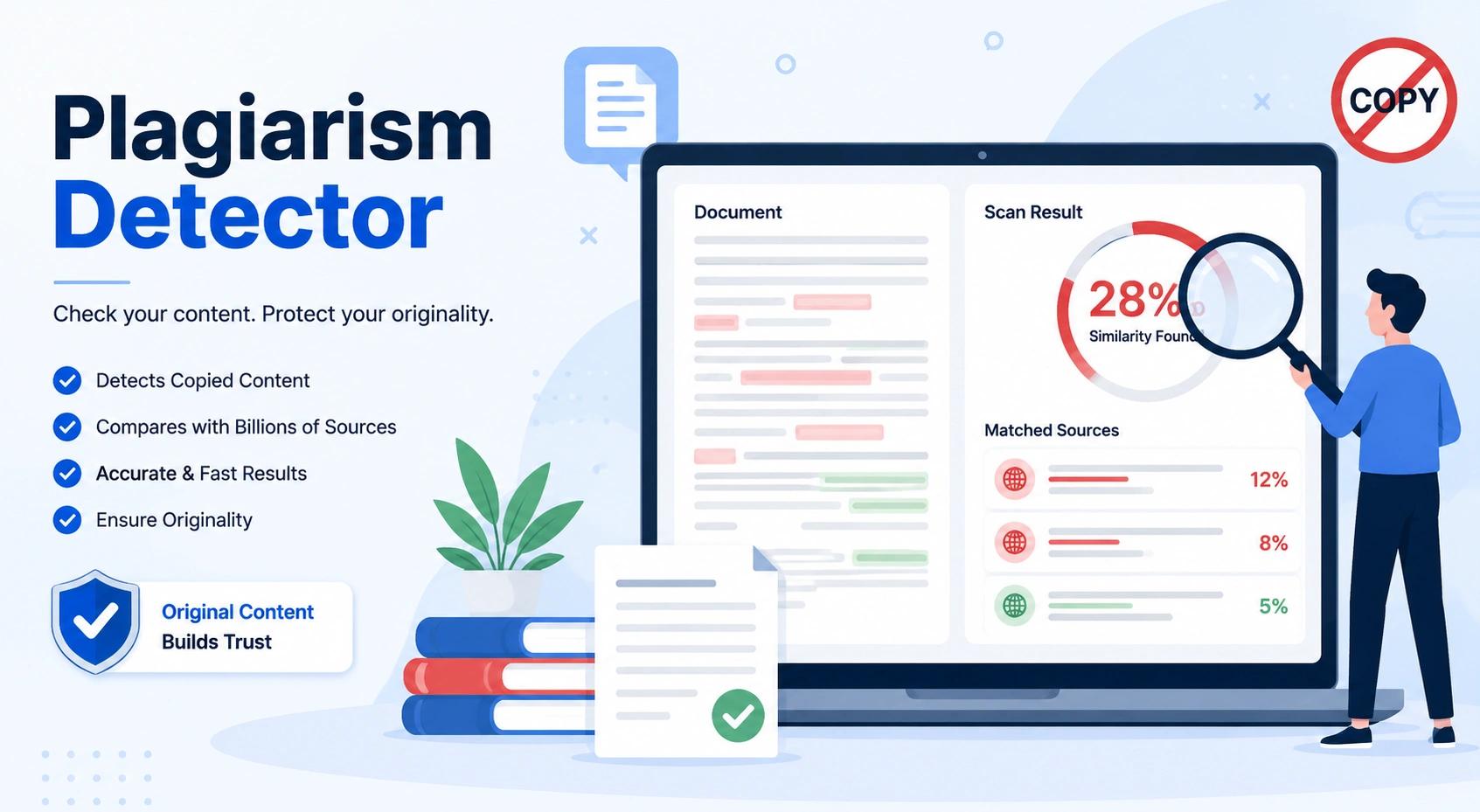
A plagiarism detector is a tool that analyzes your text and compares it against a large database of existing content. That database typically includes billions of indexed web pages, academic papers, published journals, news articles, blog posts, and other written sources. When the tool identifies sections of your writing that closely match existing content, it generates a similarity report highlighting those matches and linking to the original sources.
The purpose of a plagiarism detector is not to catch wrongdoing. Its primary purpose is to give you an honest, objective view of your content before anyone else sees it. Think of it as a final quality check that protects your work, your reputation, and your relationships with the people who read or receive what you write.
Why Originality Matters Across Every Type of Writing
Academic Writing Students face strict originality requirements at every level of education. Universities and schools use detection software at the point of submission, and even unintentional similarities can trigger a formal review. The consequences range from a failing grade to academic dismissal. Running your work through a plagiarism detector before submitting gives you the chance to identify and fix any issues on your own terms rather than waiting for a professor to flag them.
Blog and Web Content Search engines reward original content and penalize duplication. If your website publishes text that closely mirrors content already indexed elsewhere, your pages may be pushed down in search results or removed entirely. For bloggers and content teams that depend on organic traffic, this is a serious risk. A plagiarism detector used consistently before every publish protects your search rankings and keeps your content strategy on solid ground.
Freelance and Professional Writing Originality is a professional standard for freelancers, copywriters, and content agencies. Delivering work that is flagged for plagiarism damages client relationships and can end contracts immediately. Using a plagiarism detector on every deliverable demonstrates professionalism and gives clients the confidence that what they are receiving is genuinely original.
Research and Academic Publishing Researchers submitting papers to journals or conferences face rigorous originality checks as part of the editorial process. Running your manuscript through a plagiarism detector before submission is a standard step in any responsible research workflow. Catching an accidental similarity early is far better than having it surface during peer review.
Marketing and Business Content Website copy, product descriptions, press releases, and marketing materials all need to be original. Duplicate content on a business website creates SEO problems, legal exposure, and credibility issues. Regular use of a plagiarism detector across all published materials keeps your online presence clean and authoritative.
Types of Plagiarism a Good Detector Should Catch
A strong plagiarism detector goes beyond identifying verbatim copies. Here are the forms of plagiarism that a quality tool should be able to surface.
Direct Copying is the most straightforward form. Sentences or paragraphs taken verbatim from another source and presented without attribution.
Paraphrasing Without Credit occurs when someone restates another person's ideas in different words but fails to acknowledge the original source. The wording changes but the intellectual ownership does not.
Mosaic Plagiarism involves blending phrases from multiple sources with original writing to create something that superficially appears original but is largely derived from existing content.
Accidental Plagiarism happens when a writer unintentionally mirrors phrasing or structure encountered during research. This is the most common form and the one a plagiarism detector is most effective at catching before it causes a problem.
AI Generated Similarities are an increasingly relevant concern. Text produced by AI writing tools can sometimes closely resemble published content from the model's training data. Checking AI assisted content with a plagiarism detector before publishing is now a widely accepted best practice.
What to Look for in a Free Plagiarism Detector
Not all tools deliver the same quality of results. Here is what separates a genuinely useful free plagiarism detector from one that wastes your time.
Comprehensive Database The checker should scan against billions of sources including academic repositories, news archives, published journals, and indexed web content. A limited database produces results you cannot rely on.
No Sign Up Required The best tools let you check immediately without creating an account, providing an email address, or entering any personal information. Friction slows you down and discourages consistent use.
High Word Limit A free plagiarism detector that caps you at 500 or 1000 words is not useful for essays, long articles, or research papers. PlagScanPro supports up to 50000 words per scan completely free, making it one of the most generous tools available for any type of writer.
No Scan Limits Some tools restrict how many checks you can run per day or per month. PlagScanPro removes that restriction entirely. Run as many scans as your workflow requires without hitting a quota or a paywall.
Accurate Similarity Scoring Common phrases, technical terminology, and properly cited quotations should not inflate your similarity score. A well designed detector surfaces matches that genuinely need your attention rather than flagging every shared word in the English language.
Fast Results Speed matters in a real workflow. A detector that takes several minutes to return results creates unnecessary friction. The best tools return detailed reports in seconds.
Clear and Readable Reports An overall similarity percentage is a starting point, not a conclusion. The report should highlight specific matched passages and link to original sources so you can make informed decisions about what needs revision and what does not.
How to Get the Best Results From a Plagiarism Detector
Finish your draft before checking. Checking an incomplete document produces incomplete results. Wait until your content is fully written before running a scan.
Check the full document in one scan. Splitting a long document into sections and checking them separately is time consuming and produces fragmented, less reliable results. Use a tool like PlagScanPro that supports long documents in a single pass.
Read beyond the score. Do not treat the similarity percentage as the only metric that matters. Read through the flagged passages and assess each one in context. Some matches are entirely acceptable. Others need attention.
Revise with genuine originality. When a flagged passage needs work, do not simply swap out synonyms. Read the source, understand the idea, and write it entirely in your own voice before adding a citation where appropriate.
Check again after revising. A second scan confirms that your revisions improved originality without introducing any new matches in the process.
Make it a habit. The writers who benefit most from a plagiarism detector are those who use it consistently, not occasionally. Every article. Every essay. Every deliverable.
Final Thoughts
A plagiarism detector is one of the simplest and most effective tools you can add to your writing process. It costs nothing, takes only a few minutes, and protects your academic standing, your professional reputation, your search rankings, and your legal exposure all at once.
Whether you are a student checking a dissertation, a blogger reviewing an article before publishing, or a freelancer verifying a client deliverable, a reliable free plagiarism detector gives you the confidence to put your name on everything you write.
Visit PlagScanPro today and run your first scan completely free. No sign up. No word limit anxiety. No cost. Just fast, accurate results that tell you exactly how original your writing is.