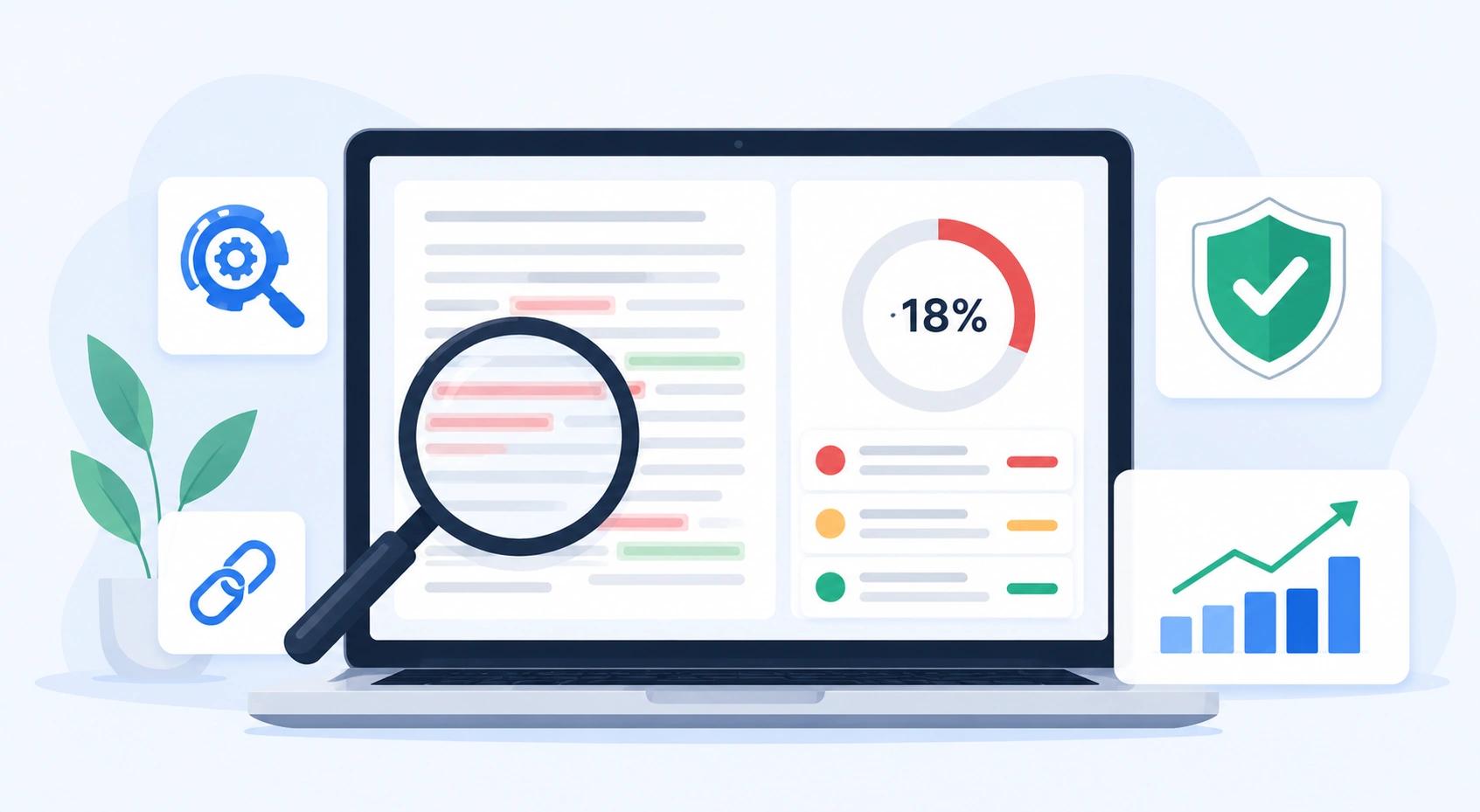
Search engine optimization is built on many pillars. Technical performance, backlink authority, keyword targeting, page speed, and user experience all contribute to how well a page ranks. But underneath all of these factors sits one requirement that no SEO strategy can succeed without: original content. An SEO tools plagiarism checker is not just a writing aid. It is a core component of any serious SEO workflow, as essential as a keyword research tool or a site audit platform.
This article explains why plagiarism checking belongs in your SEO toolkit, how duplicate content affects your rankings, what to look for in an SEO tools plagiarism checker, and how to use one effectively to protect and grow your search visibility.
Why Duplicate Content Is an SEO Problem
Google's mission is to deliver the most useful and relevant results to every search query. When multiple pages contain the same or very similar content, search engines face a decision: which version deserves to rank? In most cases, the algorithm favors the original source and suppresses or ignores the duplicate. If your content is the duplicate, your page loses visibility regardless of how well optimized everything else is.
Duplicate content creates three specific SEO problems.
Ranking Suppression Pages with content that closely mirrors existing indexed content are less likely to appear in top search results. Google may rank the original source instead of your page even if your page is technically better optimized in other areas.
Crawl Budget Waste Search engine crawlers have a limited budget for each website. When duplicate content exists across multiple pages, crawlers spend time indexing redundant material instead of discovering and ranking your most valuable content.
Diluted Link Equity When similar content exists across multiple URLs, any backlinks pointing to those pages split their authority rather than concentrating it. This weakens the overall ranking power of your content.
Using an SEO tools plagiarism checker before publishing any content eliminates these risks before they take hold.
How an SEO Tools Plagiarism Checker Protects Your Rankings
An SEO tools plagiarism checker does more than flag copied text. When used consistently as part of your content workflow, it actively protects your search performance in several ways.
Pre Publication Verification Every piece of content should be checked before it goes live. This catches any unintentional similarities introduced during research, writing, or editing and gives you the opportunity to revise before the content is indexed.
Competitor Content Audits A plagiarism checker can help you verify that content produced by agencies, freelancers, or in house writers has not been lifted or closely adapted from competitor pages or other published sources. Content that mirrors competitor material will never outrank the original.
Existing Content Reviews Over time, duplicate content can accumulate across a website without anyone noticing. Running periodic plagiarism checks across your published content library identifies pages that may be suppressing each other or competing with stronger external sources.
AI Content Verification AI writing tools are now widely used in content production. These tools can sometimes produce text that closely mirrors published content in their training data. An SEO tools plagiarism checker used on all AI assisted content before publishing ensures you are not inadvertently indexing near duplicate material.
What Makes a Good SEO Tools Plagiarism Checker
Not every plagiarism checker is suited for SEO use. Here are the features that matter most for content teams and SEO professionals.
Broad Web Coverage An SEO focused plagiarism checker needs to scan against the full breadth of indexed web content, not just academic databases. The tool should check against billions of live and cached web pages to identify any overlap with content already ranking in search results.
Bulk and Long Document Support SEO teams produce large volumes of content. A checker that limits you to 500 or 1000 words per scan is not practical for professional use. PlagScanPro supports up to 50000 words per scan with no scan limits, making it one of the most capable free options available for content teams working at scale.
Fast Turnaround Content production moves quickly. A plagiarism checker that takes several minutes to return results slows down your publishing workflow. The best tools return detailed reports in seconds so your team can review and move forward without delays.
No Sign Up or Access Barriers For SEO teams managing multiple writers and large content pipelines, a tool that requires individual accounts or imposes per user fees creates unnecessary friction. PlagScanPro requires no sign up and places no limits on how many scans you run, making it practical for teams of any size.
Detailed Source Matching A similarity percentage alone is not enough for SEO purposes. The checker should identify exactly which URLs contain matching content so you can assess whether those pages are ranking competitors, authoritative sources worth citing, or low quality sites that your content should clearly differentiate from.
Accurate Detection Beyond Exact Matches Modern search algorithms detect near duplicate content, not just verbatim copies. An SEO tools plagiarism checker should surface close paraphrasing, structural similarities, and mosaic content where phrases from multiple sources have been combined.
Building Plagiarism Checking Into Your SEO Content Workflow
The most effective way to use an SEO tools plagiarism checker is to make it a standard step in your content production process rather than an occasional audit. Here is a practical workflow.
Brief Stage When creating content briefs, check any reference articles or research sources you plan to draw from. Understanding what is already out there helps writers produce genuinely differentiated content from the start rather than accidentally mirroring existing material.
Draft Review Once a draft is complete, run it through the plagiarism checker before it moves to editing. This is the most efficient point to catch and fix issues because the writer is still close to the material and can revise quickly.
Editorial Check After editing, run a final check to confirm that no similarities were introduced during the editing process. Editors working across multiple pieces of content can occasionally introduce phrasing they have seen elsewhere without realizing it.
Pre Publish Verification Make plagiarism checking the final step before any content is scheduled or published. This creates a documented record of originality and ensures nothing slips through the cracks in a busy production schedule.
Quarterly Content Audit Every three to six months, review your published content library for duplicate content issues. Pages that have drifted in rankings for no obvious technical reason may be suffering from similarity problems that a plagiarism check will surface.
SEO Plagiarism Checking for Different Content Types
Different types of content carry different originality risks. Here is how to approach each one.
Blog Posts and Articles The most common content type and the one most likely to overlap with existing published material, especially on competitive topics. Always check before publishing.
Product Descriptions Ecommerce sites often struggle with duplicate product descriptions, either copied from manufacturer sources or repeated across multiple product variants. Unique descriptions for every product improve both user experience and indexability.
Landing Pages Service and location pages that follow a template structure can drift toward duplication across a site. Check each landing page individually to ensure the core content is sufficiently differentiated.
Guest Posts and Contributed Content Content submitted by external contributors carries originality risk that is entirely outside your control until you check it. Verifying every guest post before publication protects your site from penalties caused by someone else's shortcuts.
Translated Content Machine translated content and even human translated pieces can produce text that mirrors other translated versions of the same source material. Always check translated content before indexing it.
Final Thoughts
An SEO tools plagiarism checker is not optional for anyone serious about search performance. Duplicate content is one of the most preventable causes of ranking suppression, and the tools to prevent it are freely available and easy to use.
Whether you are a solo blogger managing a personal site or an SEO team running a high volume content operation, building plagiarism checking into your workflow is one of the highest return habits you can develop. It protects your rankings, protects your reputation, and ensures that every page you publish is working as hard as possible to earn its place in search results.
Visit PlagScanPro and run your first scan completely free. No sign up. No word limits that cut you off mid document. No cost. Just fast, accurate originality verification that keeps your SEO strategy built on solid ground.